
Your security score is one number that shows how well protected your practice is right now. It brings together findings from across Safeguard and shows exactly what is helping and what is holding you back.
The security score is part of the Safeguard™ platform.
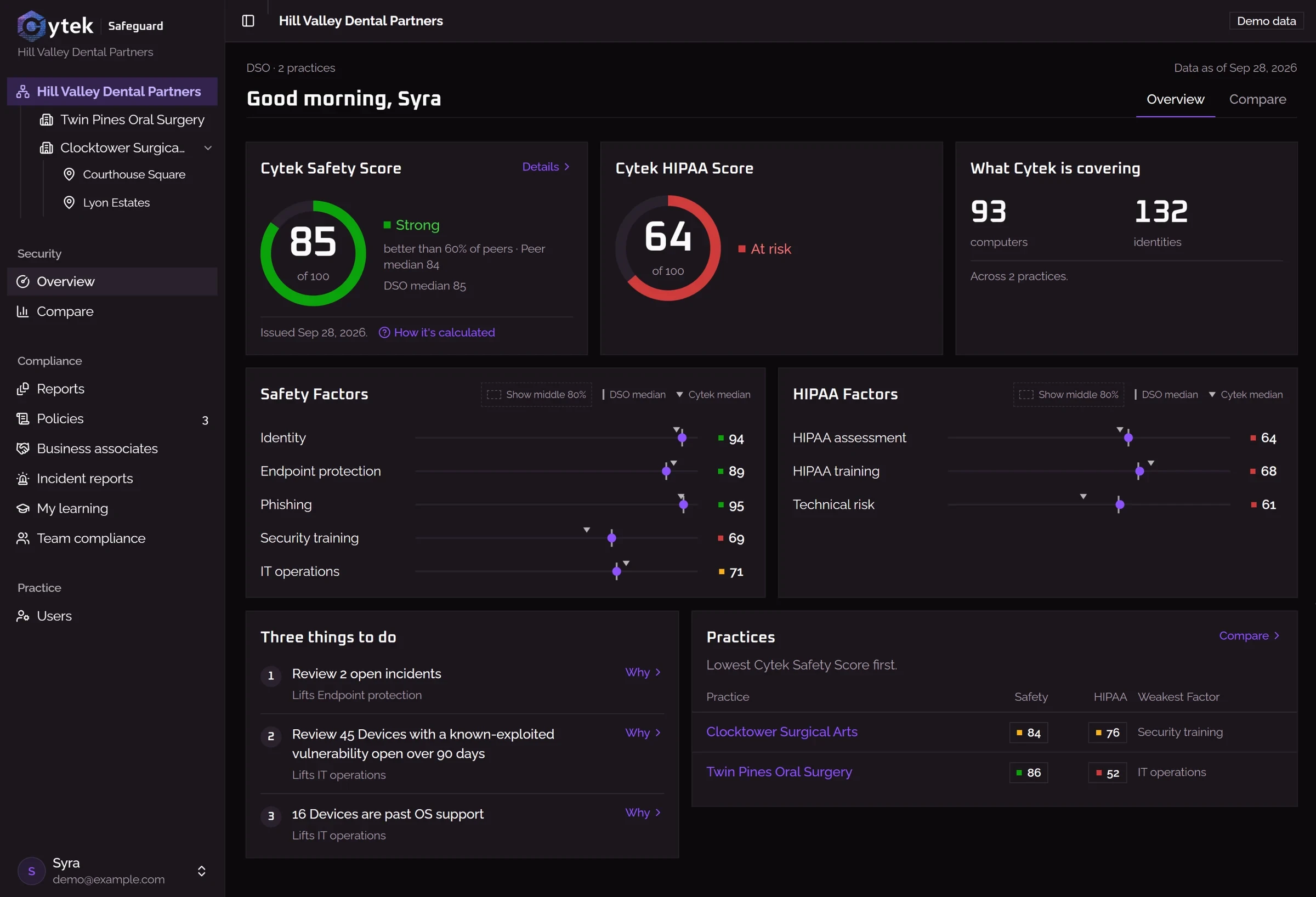
The Safety Score and HIPAA Score in Safeguard. Demo data.
01
02
Cyber insurance applications, DSO due diligence and health system partners all ask the same question: how secure are you? A score backed by scans, inventory and documentation is a much stronger answer than a checkbox.
HIPAA
A score does not replace your annual HIPAA risk assessment, but it keeps you on track between assessments.
FAQ
A score that summarizes how well an organization is protected, based on its settings, vulnerabilities and practices.
Safeguard lists the items holding it back, ranked by impact, with clear steps. Fixing the top few usually makes the biggest difference.
Many practices use it with cyber insurers, partners and their own leadership to show where they stand and how they are improving.
Start with the free risk assessment, or talk to an analyst about setting up Safeguard.
Sources: 45 CFR 164.308, administrative safeguards. This page is general information, not legal advice.
Start with the free risk assessment, or talk to an analyst.
